Blog
Your grocery bags just changed again. Here’s what California is trying to fix

I saw something at the grocery store this weekend that I haven’t seen in years: a reminder to bring my reusable bags.
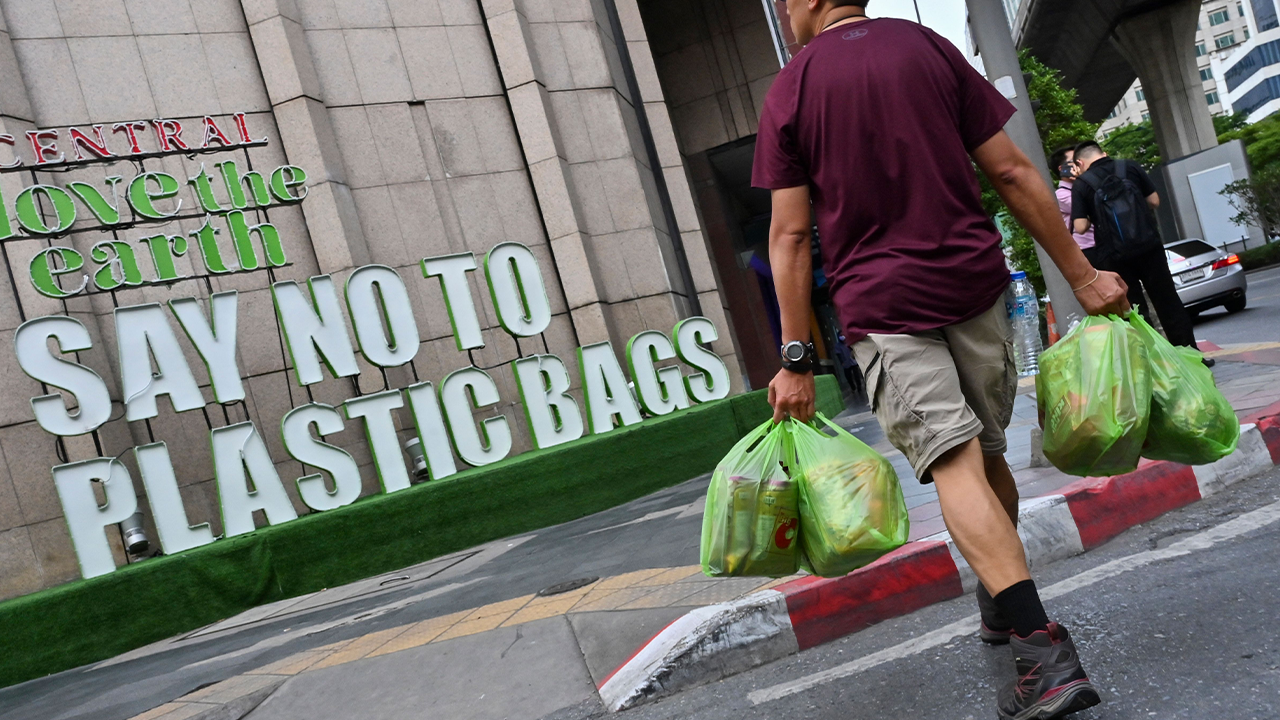
As of Jan. 1, California’s updated bag ban dictates there will be no more plastic bags available at grocery store checkouts – only paper. It aims to fix a loophole in a decade-old law that ultimately turned “reusable” bags into even more plastic waste in California’s landfills.
I brought up the new ban during a recent Chronicle staff meeting. A co-worker seemed surprised to hear it: She’d just ordered grocery delivery from Sprouts through Instacart, and her food arrived in new reusable bags. Not the thicker plastic type that had replaced flimsy single-use plastic bags at checkouts for the past decade up until the new year, but the more durable cloth-like woven plastic kind that used to typically cost $1 each at checkouts. She was charged 25 cents each.
So, a plastic bag – sturdier and thicker, but still plastic.
Under the new law, this is technically legal. Plastic bags can’t be sold at checkout, but they can be sold elsewhere in the store.
Sprouts is a bit of an outlier – it stopped offering both plastic and paper bags at checkouts in California in 2023, so bag options for delivery drivers are limited. But it’s an early example of what can happen as the updated ban rolls out amid changing consumer habits, as grocery pickup and delivery continue to grow.
Where did things go wrong in California’s original bag ban? And will this new iteration do any better? Or will the proliferation of delivery and pickup mean we’re all getting even thicker and more expensive plastic bags?
Where the first bag ban failed
Back in 2016, California voters approved Proposition 67, which validated a 2014 law (SB270) and made California the first in the nation to implement a statewide ban on plastic grocery bags made of low-density polyethylene, or LDPE. Instead of giving away thin bags for free, stores could sell you a slightly thicker version made of high-density polyethylene, or HDPE, for a small fee (a minimum of 10 cents).
The “don’t forget your bags!” signs popped up at every cart return and grocery store entrance when the ban first went into effect. But they vanished around March 2020, when the plastic bag manufacturing industry suggested reusable bags might be a viral transmission vector in the burgeoning COVID-19 pandemic. Environmental advocates criticized the industry’s sudden interest in public health as more opportunistic than civic-minded.
The spread of the novel coronavirus was never conclusively linked to plastic bags. But out of an abundance of caution, Gov. Gavin Newsom in April 2020 temporarily lifted the ban on grocery stores giving out plastic bags. The ban was reinstated after 60 days, but since then, it’s been a struggle to get people to remember to bring their own back to the store, said Mark Murray, the executive director of nonprofit environmental advocacy group Californians Against Waste.
And while the HDPE bags were intended to be reused and then recycled, it didn’t work that way in practice. In observational studies conducted by the Los Angeles Times in 2023 and CALPIRG in 2024, only a tiny fraction of shoppers brought HDPE bags back to stores to reuse. No municipal recycling facilities in California accepted them for recycling from curbside bins as of 2023. GPS tracking surveys by ABC News, CBS News and an independent environmentalist group of the store take-back recycling bins for plastic bags found they didn’t wind up at recycling facilities, either.
Instead of going to recycling centers and becoming new plastic products, the bags were winding up in the garbage – and the environment. A study of the components of the waste in California’s landfills in 2021 found more plastic bag waste was being produced per capita than before the ban had gone into effect: In 2004, the average Californian was responsible for about 8 pounds of plastic bag waste per year; by 2021, it was 11 pounds.
Lawmakers, advocacy groups and grocery store representatives wanted to find a solution that addressed the problem.
Will the new ban be any better?
The new law, SB1053, dictates that no plastic film, woven plastic or cloth bags can be sold at the point of sale in grocery stores now. Your new options: Bags can be sold in other places inside stores, like on the wall adjacent to cash registers at Trader Joe’s. You can bring your own bags from home, of course. If you accidentally leave them in your trunk, you can put the groceries back into your cart during checkout and bag them when you get to your car. Paper bags made with at least 40% recycled content are the only kind allowed to be sold at checkout, with a minimum 10-cent fee for each one.
Paper bags aren’t perfect: They typically aren’t brought back to grocery stores to be reused, and they still require environmental resources to produce and ship. And they’re more expensive for stores to purchase, said Nate Rose, the vice president of communications and public affairs at the California Grocers Association. He said his organization had worked with advocacy groups and state Sen. Catherine Blakespear, D-Encinitas, to “find common ground” on the new law in a way that would uphold the intent of the original ban while keeping costs in line for grocery stores and customers.
“Any operational costs have to be passed to the consumer if grocers want to keep their doors open,” he said.
But he said he’s glad the state landed on a version of the law that would allow stores to have an option for shoppers who forgot their bags while still encouraging people to bring theirs in.
“That’s what the spirit of the law is about,” he said.
Paper bags do have a major advantage over HDPE bags, which is that they can actually be recycled in curbside bins. So it’s a move in the right direction, said Anja Brandon, director of plastics policy at Ocean Conservancy, another group that worked on the new law.
“The original goal and vision was always to see a transition to truly reusable bags and getting rid of the highly polluting, problematic, single-use plastic bag,” she said. Policy is iterative, she said, and it made sense to revisit the original ban when it became clear it was not working as intended.
“We’re really excited to have this new, better bag ban in place that is a clean, straight prohibition on any of these plastic bags,” she said.
But what about my co-worker getting even thicker plastic bags on her Sprouts order? Would this ban go the same way – even more plastic bag waste in landfills?
The new law aims to phase out the HDPE plastic film bags, but bags made from woven plastic, cloth and other materials can still be sold in stores, just not at the point of sale.
The new law does address grocery pickup and delivery, and the same rules apply: You aren’t supposed to be able to buy new bags there unless they’re paper. Many grocery chains have transitioned to presenting pickup orders with grocery items loose in a cart or a bin, or in paper bags.
Sprouts is an unusual case, because it doesn’t have any paper bags at all. So the only option for Instacart drivers and anyone else who wants a bag at the store is to buy one from somewhere else in the store – again, legal, as long as it’s not at checkout – and use that.
I decided to ask Jan Dell what she thinks. She founded The Last Beach Cleanup, an environmental nonprofit where she headed up one of the GPS surveys of recycling take-back bins. She had been an outspoken critic of the previous bag ban, and of plastic recycling overall – “the greatest toxic greenwashing hoax in history,” she says in big letters at the top of her website. You may have seen her critiquing the practices of Amazon and other online retailers in “Buy Now! The Shopping Conspiracy,” a documentary that debuted on Netflix in 2024.
In short, she’s not one to mince words when she thinks something is bad. And this new law? Overall, she thinks it’s good.
“It’s a big success,” she said. “Less plastic is being made, less plastic is being sold, less plastic waste is made.”
But what about Sprouts? Dell signed up for Instacart to recreate my co-worker’s experience and got the same result – plastic woven bags for which she was charged 25 cents each. It’s not ideal, but is legal under the new law. For comparison, Dell ordered pickup or delivery from several other chains, and in all of those cases, her orders arrived in paper bags or loose in carts.
“I do not believe any other store is in the circumstance that Sprouts is where they’ve said, ‘We have no bags,'” she said. She didn’t think it represented a significant threat to the aim of the new ban.
A representative for Instacart declined to comment. A representative for Sprouts did not respond to a request for comment.
The new law does not ban plastic bags entirely, as in my co-worker’s experience with Sprouts. But it represents a course correction toward the goal of the original law, addressing the flaws that allowed plastic waste to explode in California.
This article originally published at Your grocery bags just changed again. Here’s what California is trying to fix.