Blog
Will this be the year Massachusetts bans plastic grocery bags?

Still, some proponents are hoping that this year will be different.
“It’s taken us two or three times in the past to get things through,” Senate President Karen Spilka said at a news conference Wednesday. “If we believe in something, we don’t give up.”
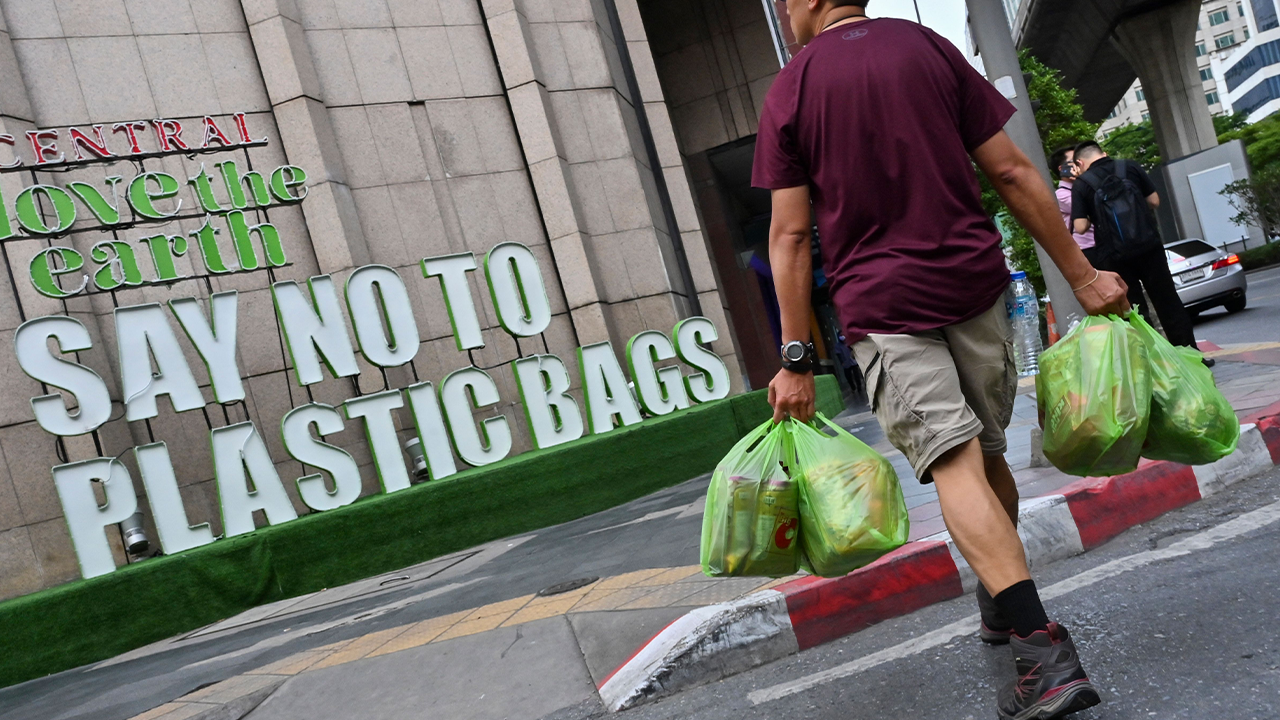
Disposable plastic bags have long been considered an ecological menace, harming wildlife and producing litter that slowly breaks down into microplastics. About half of Massachusetts cities and towns already regulate these bags.
The Senate’s legislation would allow retailers to offer reusable bags without a charge and recycled paper bags with a minimum 10-cent fee, with five cents per bag going into a state fund for environmental protection. It would also make plastic straws and utensils available only by request to customers.
Critics of the measure warn that it could drive up costs for consumers and retailers.
This year, supporters of the bag ban have taken a new approach. Instead of passing the ban as a single piece of legislation as it has in years past, the Senate tucked the measure into a $3.9 billion bond bill known as the Mass Ready Act. If it passes, the act could support the state’s largest-ever investment in preparing for climate change, allowing Massachusetts to borrow hundreds of millions of dollars to protect clean drinking water, build coastal infrastructure projects, and help cities and towns combat extreme weather.
Some environmentalists were optimistic that including the bag ban in such an important measure — one the House is sure to take up — could improve its odds of passing.
Though the bill could substantially change before becoming law, the Mass Ready Act is a “must-pass” legislation, said David Melly, senior policy director for the Environmental League of Massachusetts.
“Better late than never,” he said of the bag ban. “Hopefully now is when we do it.”
For environmentalists, the ban is a no-brainer. Janet Domenitz, the executive director of Massachusetts Public Interest Research Group, a non-profit consumer advocacy organization, described it as “a common-sense, simple, practical step.”
It’s also nothing new. Domenitz recalled when, two decades ago, a former state lawmaker called to tell her, “I’ve seen one too many plastic bags hanging from trees, I’m going to file a bill to ban them.”
Since that first effort failed, bag bans have gained traction across the state. More than 160 Massachusetts cities and towns, representing about 70 percent of the state’s population, regulate single-use shopping bags, according to a tally from the Massachusetts chapter of the Sierra Club.
Some retailers support the measure as well. Brian Houghton, senior vice president of the Massachusetts Food Association, said the trade association has long supported a plastic bag ban, though he has some qualms with the specifics of the Senate’s plan. For example, he said he’d like to see the 10 cent-charge per bag pocketed entirely by the retailer.
Houghton said the current jumble of regulations puts a strain on retailers that operate several stores in different cities with different policies.
“It’s a patchwork that’s difficult to live with,” he said.
Still, a ban has repeatedly failed in the Legislature. The Senate has backed such a ban at least four times, most recently in 2024, but the measure has never passed in the House.
That history could repeat this year. Earlier this month, Mariano told reporters, “We’ve always sort of stayed away from a statewide mandate because we felt that there was a bit of a burden on small businesses and the mom-and-pop stores that populate some of our big cities.”
The Senate proposal includes a carve-out for small businesses that exempts them from collecting bag fees. A spokesperson for Mariano declined to comment further.
State Senator Becca Rausch, who co-chairs the Legislature’s Committee on Environment and Natural Resources, said it was important to craft a ban that would be feasible for all retailers.
“We’ve built in an exception for small businesses,” she said. “We’re making sure to take care of everybody.”
Still, the measure has been opposed by industry groups representing the plastic bag industry and retailers.
The American Recyclable Plastic Bag Alliance has opposed bag bans in several states, arguing that they increase costs for shoppers without making significant environmental improvements. Though paper bags are easier to recycle and are biodegradable, researchers have found that they are responsible for more planet-warming emissions than single-use plastic bags. Because of how they are produced, reusable bags and totes must be used several times in order to have the same carbon footprint as disposable bags on a per-use basis.
Bill Rennie, senior vice president of the Retailers Association of Massachusetts, said the bag ban measure would drive up costs at a time when consumers are already deeply concerned about affordability. He said the 10-cent charge on paper bags would burden shoppers, and does not believe retailers should have to split that revenue with the state.
“We recognize that given that we have all these local bans out there, it may be time for a state standard,” he said. “But not with a split fee.”
Kate Selig can be reached at kate.selig@globe.com. Follow her on X @kate_selig.